Reading Is Not Learning - The Split Method for Overloaded Brains
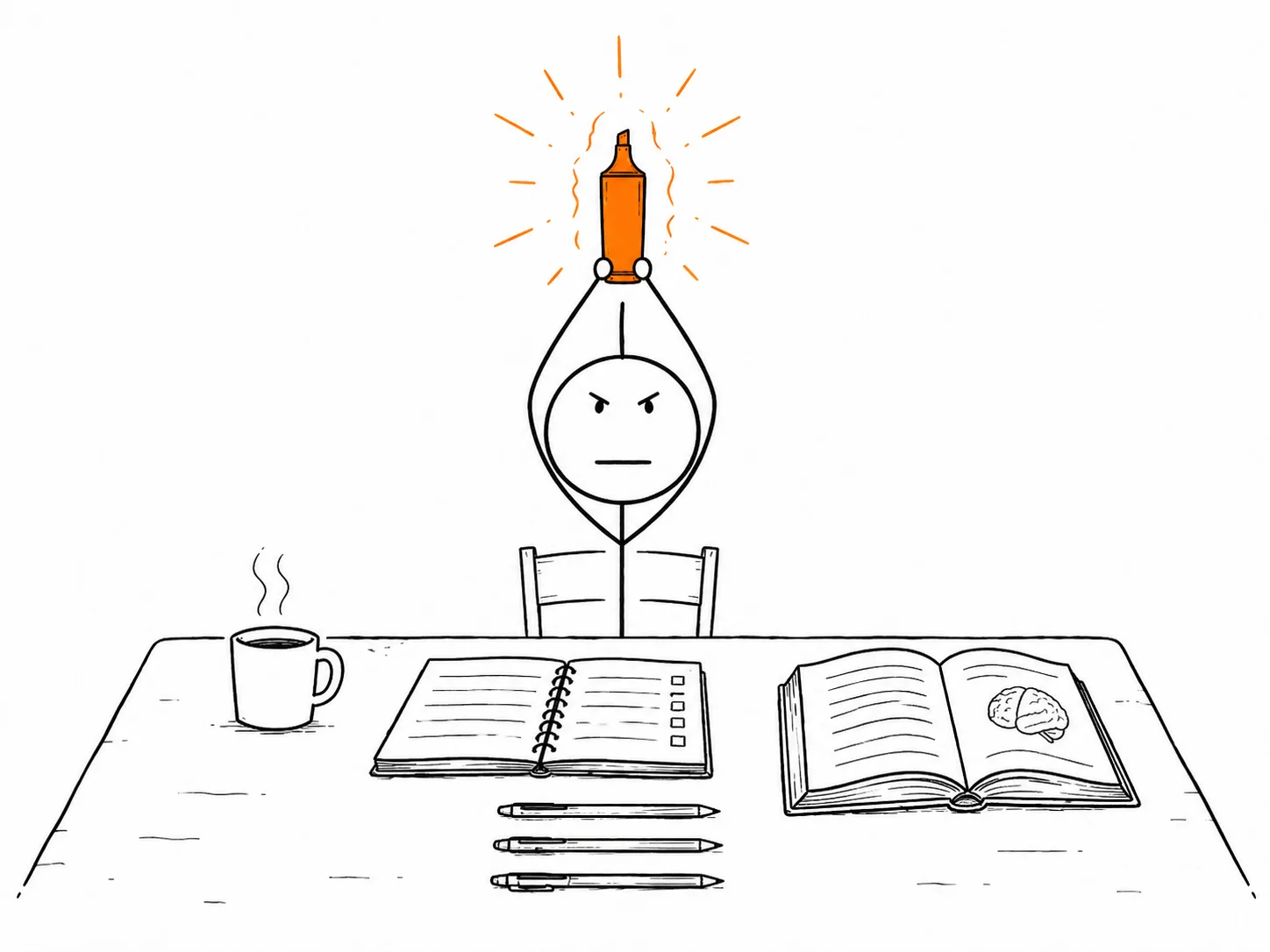
Six years ago I bought a psychology textbook with the genuine belief that it would fix my brain. I sat down at the kitchen table on a Saturday morning, gripping my highlighter like it was Excalibur. The notebook was open, three pens were lined up like surgical instruments, and the coffee was hot. I had the motivation of a scholar about to crack the Enigma code, and I was certain that two hours from now I would emerge with notes, insights, and a dramatically reorganized understanding of focused work.
Two hours later I had covered four pages. My head was pounding, the coffee had gone cold, and I had quietly started to hate the book. I closed it convinced that either any Cambridge student was overrated or I was stupid, both of which were comforting in different ways.
What I had actually done was simpler and more humiliating: I had spent two hours doing two incompatible tasks at the same time, and then blamed the text for the fact that I remembered almost none of it. This is the trap most so-called “active readers” never escape. We are taught that good reading means reading with a pen, and that anything else is passive consumption. So we sit down with our highlighters and our blank notebooks, and we wonder why books increasingly feel like a chore. The problem is not that note-taking is bad. The problem is that doing it at the same time as reading is a high-effort way to procrastinate on actually understanding the book.
Why your brain fries
Working memory is small. Cognitive psychologist Nelson Cowan, who has spent most of his career arguing about exactly how small, settled on a working estimate of about four chunks. That is the entire stage on which your conscious mind performs. Every word you are currently holding, every half-formed connection between this paragraph and the previous one, every meta-thought about whether you should be taking notes — all of it competes for those four slots.
When you read a paragraph that is genuinely worth reading, the paragraph itself takes most of those slots. You are holding the argument, the example, the implicit objection your own brain is starting to raise. There is no room left over for the second cognitive operation of paraphrasing the paragraph into a marginalia note, deciding what to highlight, comparing it to what you already wrote on the previous page, and worrying about whether your notation system will scale. So one of two things happens. Either the paragraph slides off the table to make room for the note, in which case your note is a watered-down version of something you no longer remember, or the note never really gets formed and you stare blankly at the page for fifteen seconds before moving on, having understood nothing.
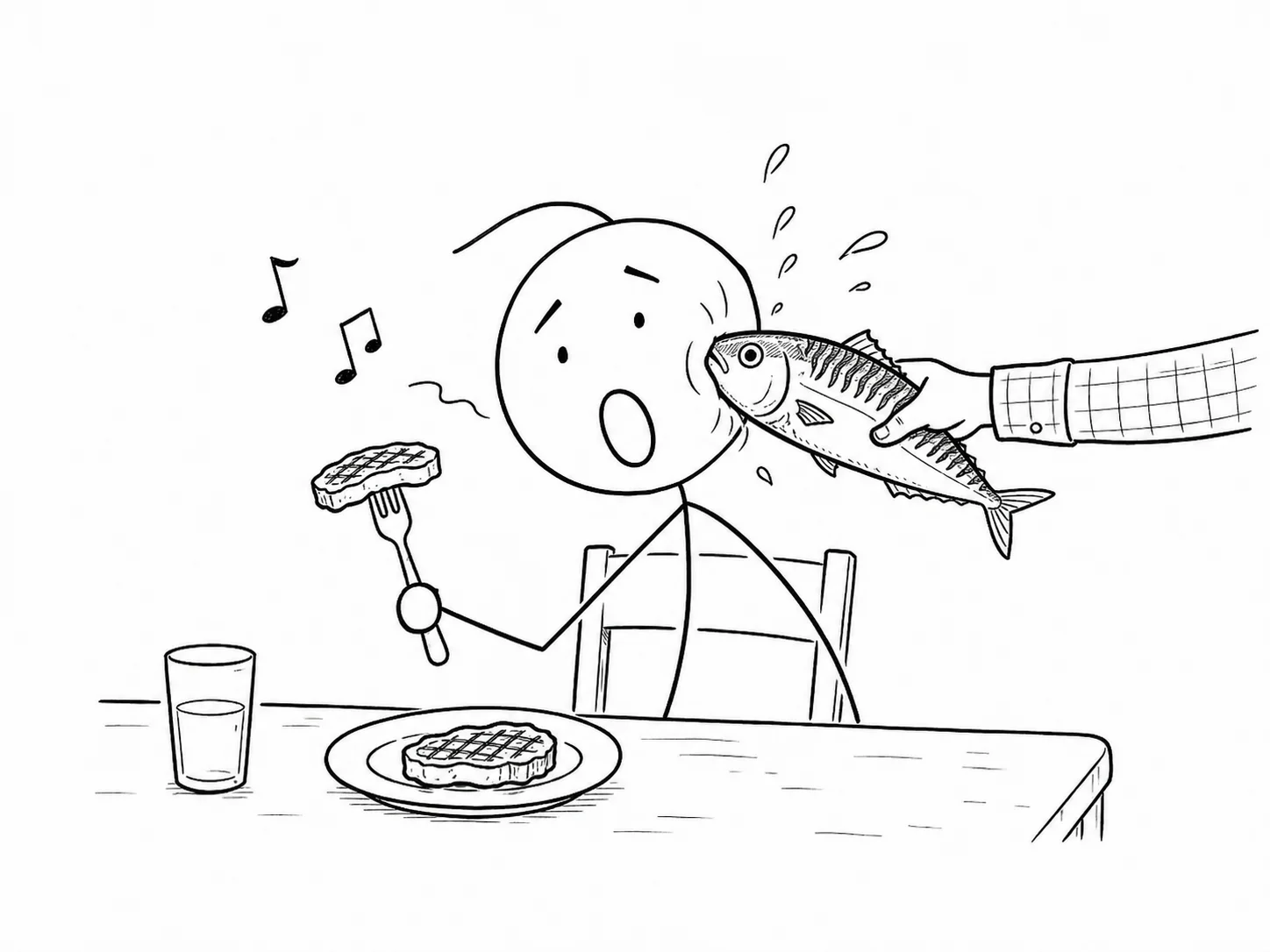
Reading is an input task. It rewards immersion and a kind of mental looseness, where you let the author lead, hold the thread of their argument, and sit with ambiguity until it resolves. Note-taking is the opposite. It is an output task, and it requires you to step outside the author’s voice, decide what you actually believe, and commit to a phrasing of your own. Trying to do both at once is like eating a steak dinner while singing an opera aria while a man named Zdzisław repeatedly slaps you with a wet mackerel. You will not produce art. You will choke.
A few rounds of that and your brain begins to associate the act of opening a book with the experience of being mildly punished for it. This is the real reason your shelf is a graveyard of books abandoned in Chapter One. It is not a discipline problem. It is a training effect. You taught yourself, one futile session at a time, that reading is the kind of thing that gives you a headache.
Reading is not learning, and learning is not reading. The fix is to stop trying to do them in the same hour.
The fix: hunt now, fight later
Robert Bjork has spent decades building the case for what he calls desirable difficulty: your brain only retains what it had to genuinely struggle for. The struggle of reading-while-noting feels like exactly the kind of effort Bjork is describing, which is part of why the myth has survived so long. But it is the wrong kind of difficulty. It is friction that produces no memory. You are not building anything. You are exhausting yourself in the vicinity of a book.
Split the work into three stages instead. Each stage matches what your brain can actually do in that mode.
Stage one: just read
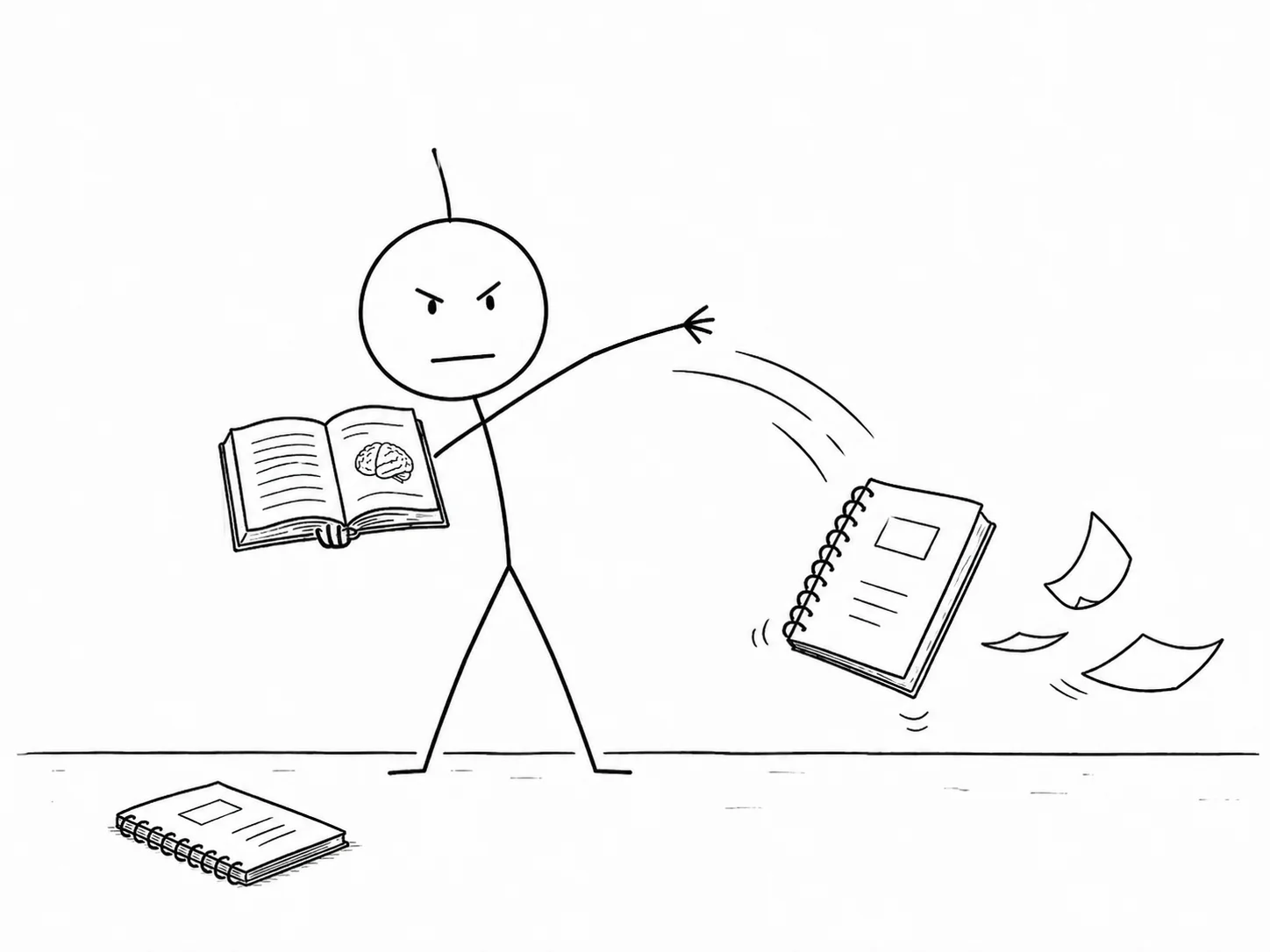
Put the notebook on the floor. Walk across the room and put it on a different floor if you have to. Your only job during this stage is to get through the text with your full attention on the author’s argument. Your brain will protest, because it has been trained to believe that reading without writing is somehow a waste, and it is afraid you will forget everything the moment you turn the page. Ignore the protest. Your cognitive load is already at capacity holding the text itself, and adding the synthesis layer will not save you from forgetting. It will guarantee it.
You are still allowed to interact with the page, but only at the level of a hunter marking a trail. Highlight passages that genuinely catch your attention, not passages you think you “should” highlight because they sound important. Scribble blunt margin notes that are not full sentences: an exclamation mark, a question mark, the word verify, the word bullshit, occasionally just lol. Do not stop to summarize a chapter. Do not switch tabs to “link this idea to another note.” Do not open Obsidian. If you stumble onto a sentence about someone licking an old man’s forehead, just think huh, weird, maybe I’ll try it, highlight it, and keep moving. You are not building a knowledge graph. You are tracking which parts of the text were alive enough to be worth coming back to.
Stage two: walk away
When you finish the chapter, close the book and physically leave it. The temptation at this point is to immediately open your notes app and start “processing” the highlights while everything is fresh, but the freshness is exactly the problem. Your working memory is still saturated with the text, which means anything you write in the next ten minutes will be transcription dressed up as synthesis.
What needs to happen is something Barbara Oakley, in her work on learning, calls a shift into diffuse mode. Your conscious attention disengages from the material, and a slower, less verbal layer of your brain takes over the work of stitching the new ideas into the structures you already have. This stitching does not happen at your desk. It happens in the shower, on a walk, while you are doing nothing in particular and staring at a wall, which, I will admit, is my own preferred technique and one I recommend more than I should in polite company.
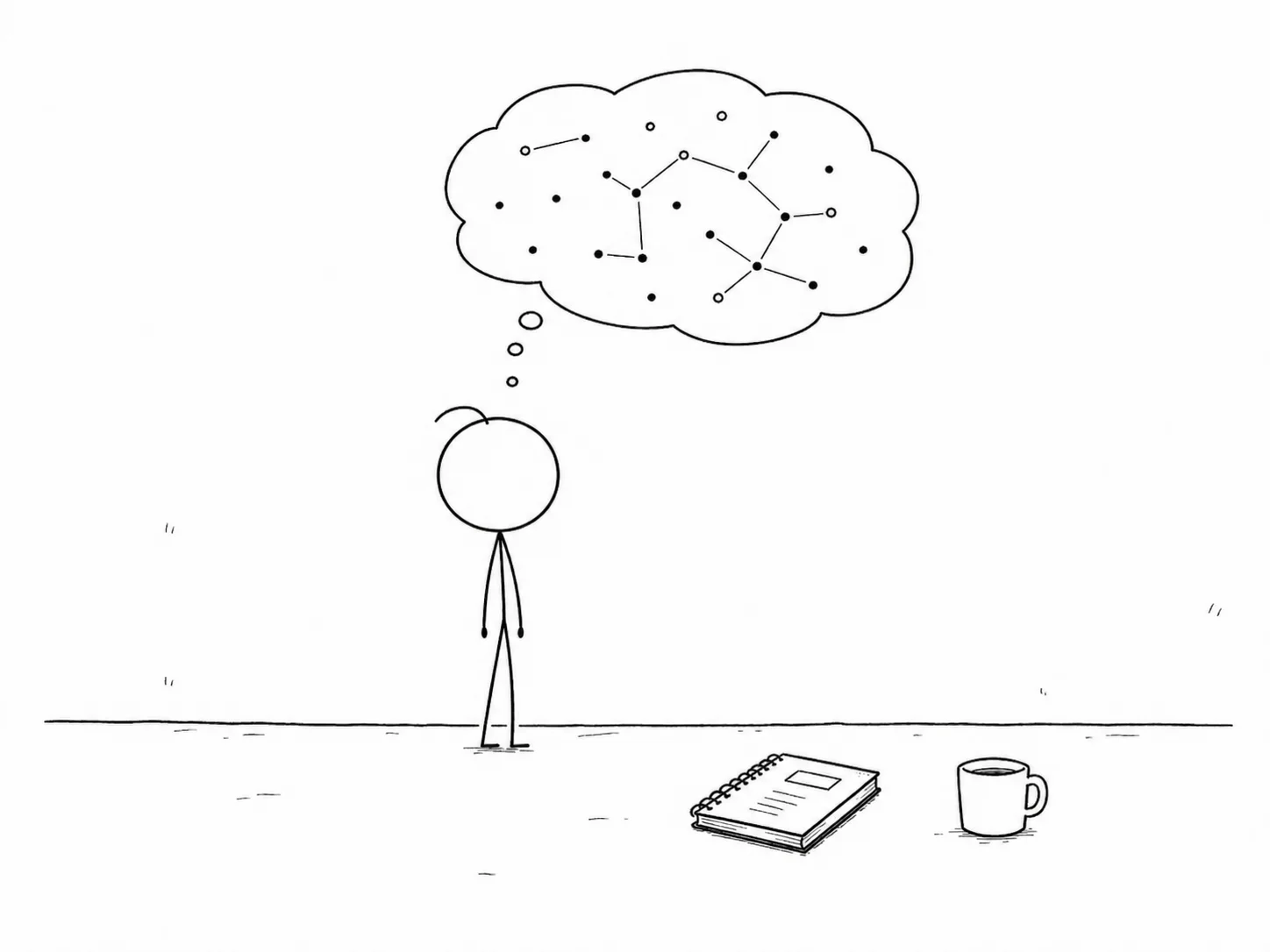
The break can last twenty minutes or three days. The point is that when you come back, the text has been partially digested for you, and you will know which highlights still feel alive and which were just sugar.
Stage three: the fight
Now you can open the notebook. Read your highlights, and ask one question of each one: is this actually useful for what I am trying to do right now? Most of the answer should be no. A book that gives you three genuinely useful ideas is an excellent book. A book that gives you fifty highlights you “should remember” is a book that will live in your archive untouched until you delete it during a productivity-shame purge three years from now.
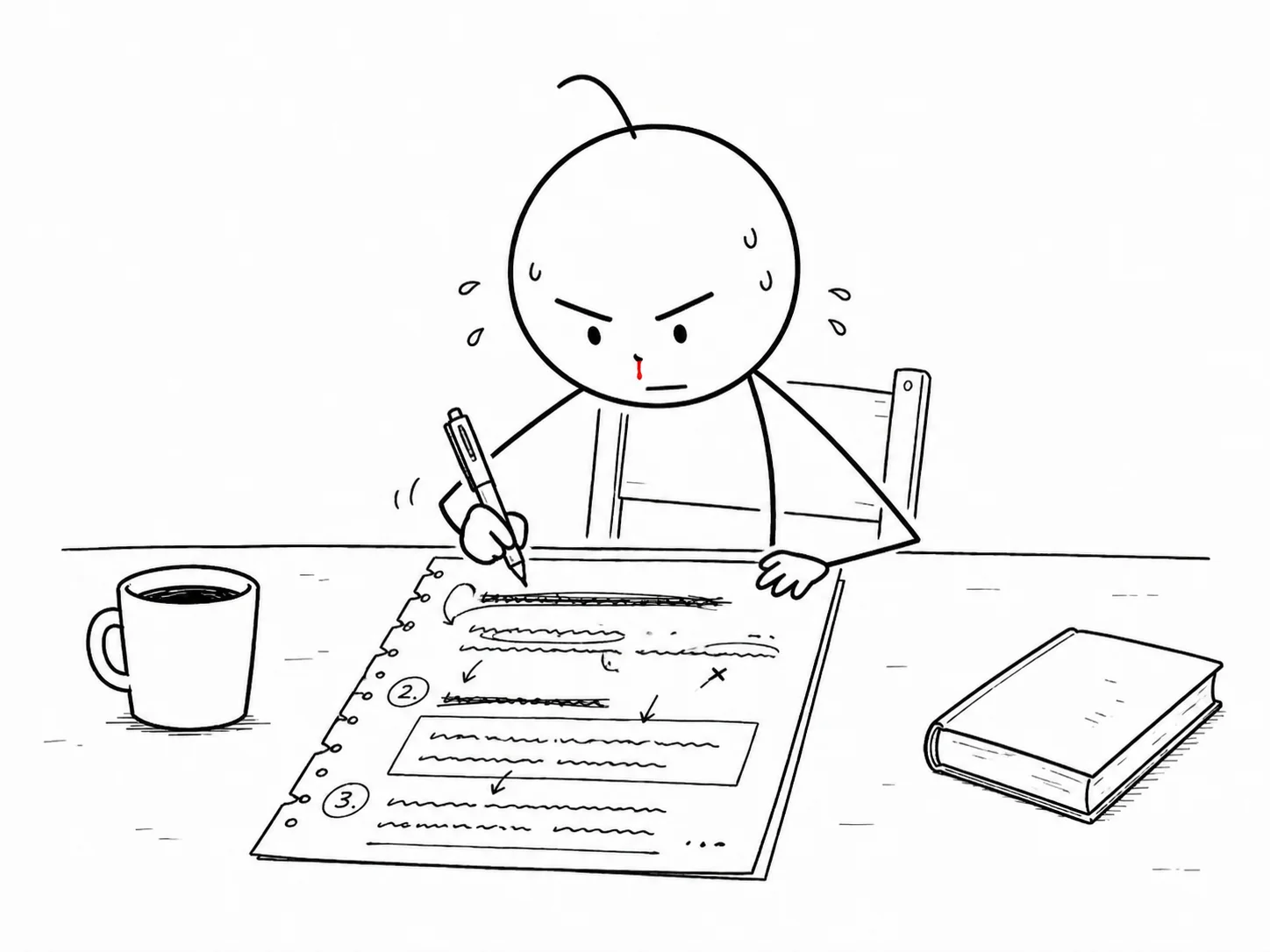
For the highlights that survive the question, you have to fight with them. I do not particularly care what the fight looks like. Make a flashcard. Write a permanent note in your own words, without looking at the source. Explain the idea out loud to your partner, your dog, or the wall you spent so much time staring at during stage two. Whatever the format, the rule is the same: if you are not sweating a little while you rephrase the idea, you are not learning it. You are transcribing it. And transcription is the original sin we are trying to escape.
Try it once
You will write fewer notes this way. This will feel like a loss for about a week, until you realize that the notes you do write are the ones you actually return to. They will be the scars from the fight rather than the receipts from the bookstore, and they will mean something specifically because they cost you something to produce.
Pick one chapter of one book this week and try it. Throw the notebook on the floor before you start. Read the chapter. Walk away. Come back the next day and fight only with the highlights that still feel alive. Then send me a message and tell me whether the headache disappeared, because I would genuinely like to know.
FAQ
Should you take notes while reading a book?
No. Reading and note-taking fight for the same four working-memory slots — that is cognitive psychologist Nelson Cowan’s number, give or take. Try to run both at once and one of them loses, usually the reading. Read first. Take the notes later, in a separate session, when the text has had time to settle.
Why does taking notes while reading feel so exhausting?
Because you are doing two opposite jobs at the same time. Reading wants you to follow the author’s argument with your guard down. Note-taking wants you to step outside that argument and commit to your own phrasing. Switching modes every paragraph drains you, and the note you produce is a watered-down version of a paragraph you no longer remember.
What is the split method for reading?
Three stages, each one given its own time. First, read the chapter with your full attention and nothing more sophisticated than blunt margin marks — an exclamation mark, a question mark, the word bullshit. Then close the book and walk away, so that what Barbara Oakley calls diffuse mode can do the stitching while you stare at a wall. Come back the next day and fight only with the highlights that still feel alive.
What is desirable difficulty?
A term from psychologist Robert Bjork. The idea is that your brain only retains what it had to genuinely struggle for — but only the right kind of struggle. Rephrasing an idea from memory is the right kind. Highlighting frantically while you read is the wrong kind. Both make you tired, only one makes you remember.
How many notes should you take from one book?
Far fewer than you think. A book that gives you three ideas you actually use is an excellent book. The other forty highlights, the ones you “should remember”, end up in an archive folder you will delete three years from now during a productivity-shame purge.
...l reading the book and trying to take notes at the same time. That one I wrote about separately, in [[Reading Is Not Learning]].